Activator Methods versus Manual Adjustments: Choosing the Right Chiropractor Near Me
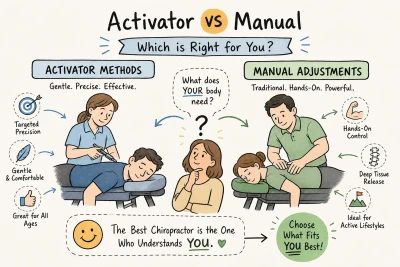
Activator Methods uses a small, handheld instrument to deliver a precise, low-force impulse to targeted joints, while manual adjustments rely on a hands-on, high-velocity thrust that often produces an audible pop. When you're searching for a chiropractor near me in Santa Fe or Northern New Mexico, understanding this distinction can help you choose a better-tolerated approach and avoid treatments that don't fit your needs. For older adults, patients sensitive to forceful manipulation, or anyone trying to avoid surgery or injections, Activator Methods may be more appropriate or better tolerated, clinical choice should still follow assessment, diagnosis, and your own preferences. Santa Fe has one chiropractor certified in Activator Methods with nearly 40 years of clinical experience, and that level of specialization is exactly what makes the choice of provider matter more than most people realize.
How do Activator Methods and manual adjustments actually work?
Both techniques aim to restore proper joint motion and reduce pain. The mechanical path to that outcome is quite different, and understanding what each feels like from the patient's perspective helps you identify the approach that suits your body, and your health history.
The mechanics of a manual spinal adjustment
A traditional manual adjustment, also called high-velocity low-amplitude (HVLA) thrust manipulation, involves the chiropractor using their hands to apply a quick, controlled force to a specific spinal segment. The familiar "pop" is gas releasing from the joint capsule, not bones cracking. Most patients tolerate it well, but the force and positioning involved can feel jarring for people with arthritis, osteoporosis, or surgical hardware in the spine.
What the Activator instrument actually does
The Activator is a spring-loaded handheld device that delivers a measured impulse to a joint in milliseconds, faster than the body's natural muscle-guarding reflex can respond. That speed means the adjustment reaches the target joint before surrounding muscles can tense up. That reflex-outpacing quality is why the technique works without twisting, cracking, or broad force. The sensation is a light tapping pressure, not a forceful thrust. There is no audible pop, and positioning varies by the contact points being addressed.
How the two compare in practice
In clinical practice, both approaches show meaningful improvement in pain and joint function for a broad range of patients. The stronger reason to choose one over the other is usually patient-specific: your bone health, surgical history, sensitivity to force, and comfort level with spinal manipulation all shape which technique is the more appropriate choice.
Why sensitive patients and older adults often do better with Activator
For people with osteoporosis, arthritis, surgical hardware in the spine, or heightened sensitivity to force, a manual thrust can feel jarring and occasionally causes temporary soreness afterward. Activator Methods sidesteps that entirely. Older adults commonly report that the gentler input feels more manageable and that they leave the table without the post-adjustment stiffness that sometimes follows a manual technique. The same advantage applies to patients who have had prior poor experiences with traditional chiropractic or who feel anxious about spinal manipulation.
Where low-force care fits when you're avoiding surgery or injections
Patients who have been recommended epidural steroid injections, nerve ablations, or spinal surgery but want to explore non-invasive options first are often strong candidates for Activator Methods. For selected cases involving sciatica or disc-related pain, instrument-assisted care may help address joint dysfunction and can be an option when forceful thrusts are poorly tolerated, though medical evaluation is often needed for these conditions. Dr. Short works with patients who want to exhaust non-surgical possibilities before committing to a procedure, and precision-based low-force care is central to that approach.
What signs tell you it's time to find a chiropractor near me?
Many people wait far too long before seeking care. By the time they contact a chiropractic clinic, pain has already disrupted sleep, work, and daily movement for months. There are clearer, earlier signals worth acting on.
Chronic pain patterns in the back, neck, and extremities
Pain that has persisted for more than four to six weeks, pain that returns repeatedly even after rest, and discomfort that radiates down the arm or leg are strong indicators that the underlying joint or nerve dysfunction needs direct treatment. Chiropractic care is particularly suited to these patterns when no serious structural damage requires surgery. Waiting for the problem to resolve on its own rarely works when an ongoing mechanical issue is the root cause.
Conditions that typically respond to chiropractic treatment
Back pain, neck pain, sciatica, herniated discs, migraines, carpal tunnel syndrome, vertigo, neuropathy, and joint pain in the hips, knees, and shoulders are all conditions that chiropractic assessment and treatment may address in selected patients, though evidence strength varies by condition. A qualified local chiropractic office will evaluate your specific presentation before recommending a care plan, not the other way around. The examination always comes before the recommendation.
Symptoms that need a medical evaluation first
Severe weakness in a limb, sudden loss of bladder or bowel control, unexplained weight loss, fever alongside back pain, or pain following significant trauma all require immediate medical assessment. These are not presentations a chiropractor should evaluate in isolation. Any reputable practitioner will recognize these warning signs and refer you to the appropriate provider without hesitation.
How should you verify a chiropractor near me before booking?
A license on the wall and a five-star Google rating don't tell the full story. Knowing what to check takes about two minutes and protects you from providers who overstate their training or list techniques they have not formally studied. Follow this link to locate a certified Advanced Proficiency chiropractor near you.
What advanced technique certifications actually mean
Certifications like the Activator Methods Advanced Proficiency Rating represent formal postgraduate training that goes beyond the standard D.C. degree. Achieving this rating requires completing the Advanced Scan Protocol course, both the Upper and Lower Extremities courses, passing written tests with a score of at least 80%, and maintaining at least 8 continuing-education hours in Activator Methods each calendar year. A practitioner who has invested that level of ongoing, tested training in a specific technique offers something fundamentally different from a clinic that simply lists the technique on its website without formal credentialing.
Why technique-specific specialization matters for complex cases
For patients who have already tried general chiropractic care or physical therapy without lasting relief, a provider who has dedicated decades to mastering a single technique is more likely to identify what previous care missed. This is especially relevant in Northern New Mexico, where the density of specialized practitioners is lower than in major metro areas. When proximity is the main filter you're using to find a provider, credentials deserve equal or greater weight.
What should you ask any chiropractic clinic before your first visit?
A strong clinic will answer these questions clearly and without pressure. A clinic that deflects them or pushes you toward a prepaid package before examining you is one to reconsider before booking.
What your first visit should include and how to read the treatment plan
A proper first visit includes a detailed health history, physical and orthopedic examination, and a clear explanation of findings before any treatment begins. The provider should tell you what they found, what they recommend, and approximately how many visits your specific condition is likely to require. A plan that commits you to 30 visits upfront before knowing your response to care is a sales strategy, not a clinical recommendation.
Green flags and red flags in how a clinic communicates
Green flags include a provider who takes time to explain your diagnosis, welcomes your questions, and gives you a clear reassessment point rather than an open-ended commitment. Red flags include high-pressure upselling, vague answers about qualifications, and promises of results before the examination is complete. The way a clinic communicates before your first visit tells you a great deal about how care will be delivered after it.
A Santa Fe chiropractor worth knowing: Dr. Brian Short, DC
If you're a Santa Fe resident searching for the best chiropractor near me for low-force, precision-based care, Dr. Brian Short, DC stands out in this region for a specific and verifiable reason. Dr. Brian Short is the only certified Activator Methods practitioner in Northern New Mexico.
Close to four decades of experience and a technique few providers can offer
Dr. Short has been in clinical practice for nearly 40 years and holds Advanced Proficiency certification in Activator Methods Chiropractic Technique. His practice at the Saint Francis Professional Center treats back pain, neck pain, sciatica, herniated discs, migraines, vertigo, neuropathy, carpal tunnel syndrome, and extremity conditions.
Who this practice is built for
Dr. Short's approach is particularly well-suited for older adults who are uncomfortable with the popping and twisting of traditional adjustments, patients who have tried standard chiropractic or physical therapy without lasting relief, and those who have been told they need injections or surgery but want to exhaust non-invasive options first. No referral is required to schedule a visit, which means you can take the first step on your own timeline.
Getting started with a free consultation
Dr. Short offers a complimentary consultation to evaluate whether his approach is the right option for your condition. There is no obligation and no pressure to commit to a care plan. If you've been searching for a chiropractor near me in Santa Fe and want to know whether Activator Methods could work for your situation, contacting his office directly is the practical next step.
The bottom line on choosing the right chiropractor near me
Choosing between Activator Methods and manual adjustments comes down to your body, your condition, and your comfort with how care is delivered. For many patients in Santa Fe, especially older adults or those who have not responded to conventional treatments, low-force instrument-based care is a more precise and less physically demanding path to lasting relief.
When evaluating any chiropractor near me, verify their license through the state board, understand what certifications actually represent, and ask clear questions before committing to a care plan. A provider who welcomes those questions and answers them directly is one worth trusting.
If you're in Northern New Mexico and want to experience what close to four decades of Activator Methods expertise looks like in practice, Dr. Brian Short, DC at the Saint Francis Professional Center offers a free consultation to help you determine whether this approach is suited to your needs. Reach out to his office to get started.
Frequently Asked Questions
Do I need a referral to schedule a visit with Dr. Brian Short, DC?
No, you do not need a referral to schedule a visit with Dr. Brian Short, DC. We state that no referral is required, so you can book a complimentary consultation on your own timeline to see whether Activator Methods suits your needs.
How can I confirm a chiropractor actually holds Activator Methods certification?
For those interested in experiencing the benefits of this innovative chiropractic technique, the Activator website offers a worldwide directory of qualified chiropractors with a current proficiency rating in the Activator Methods Chiropractic Technique. Follow this link to locate a certified Advanced Proficiency chiropractor near you.
